



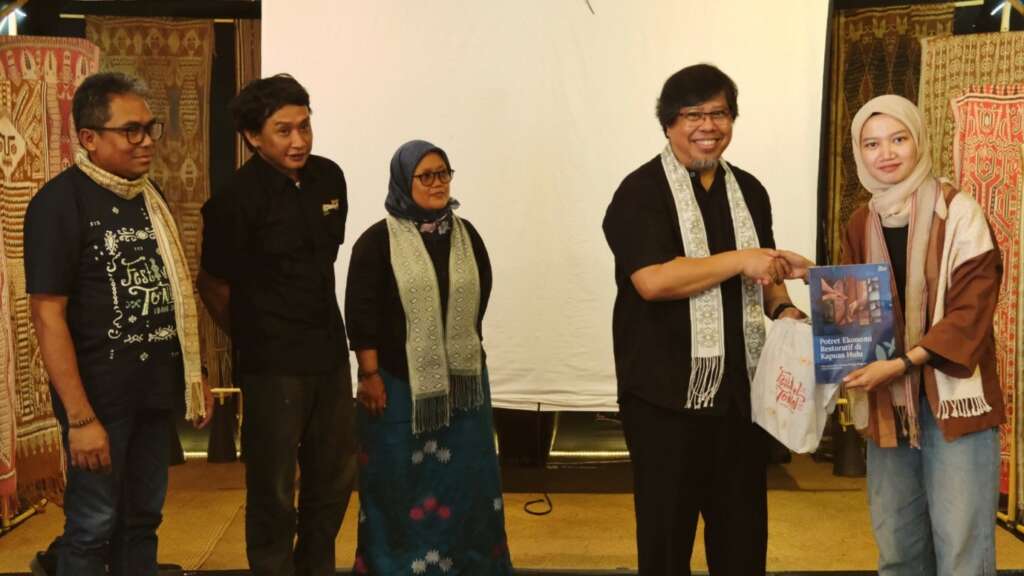
Embaloh Hulu, 19 December 2025 – Forest Watch Indonesia (FWI) has released its latest study, “Potret Ekonomi Restoratif di Kapuas Hulu” (Portrait of Restorative Economy in Kapuas Hulu), highlighting how the Indigenous Dayak Iban community in West Kalimantan safeguards forests while advancing a restorative economic model rooted in culture and sustainability.
Key Findings:
- Forest cover resilience: West Kalimantan retains 5.7 million hectares (38.81%) of natural forest, yet faces mounting pressure from oil palm expansion, now reaching 4.8 million hectares (32.84%).
- Indigenous territories as ecological buffers: Annual deforestation rates in customary lands are significantly lower (12,632 ha/year) compared to non-customary lands (109,395 ha/year).
- Knowledge transmission: Community-led initiatives such as Sekolah Adat and SEPEDA (School of Education and Culture) ensure intergenerational transfer of ecological wisdom and cultural identity.
- Restorative practices: The Dayak Iban communities of Sungai Utik and Sadap sustain livelihoods through rotational farming, non-timber forest products, and traditional weaving using natural dyes—demonstrating a living model of circular, low-impact economy.
- The total economic potential that the indigenous people of West Kalimantan can obtain from kratom ranges from IDR 0.70 trillion to IDR 1.04 trillion.
- FWI’s spatial analysis shows that there are approximately 5,715 hectares of rattan potential within customary territories in West Kalimantan, with Ketapang, Kapuas Hulu, and Sekadau having the highest rattan potential, with areas of 2,118.9 hectares, 1,695 hectares, and 896.7 hectares, respectively. The total economic potential of woven products by indigenous communities in West Kalimantan reaches IDR 3.7 trillion, with IDR 12.4 trillion for woven products.
- This potential even exceeds the total economic value of palm oil production in West Kalimantan, based on a study by Sharma et al. (2019), which only reached around IDR 98.25 billion.
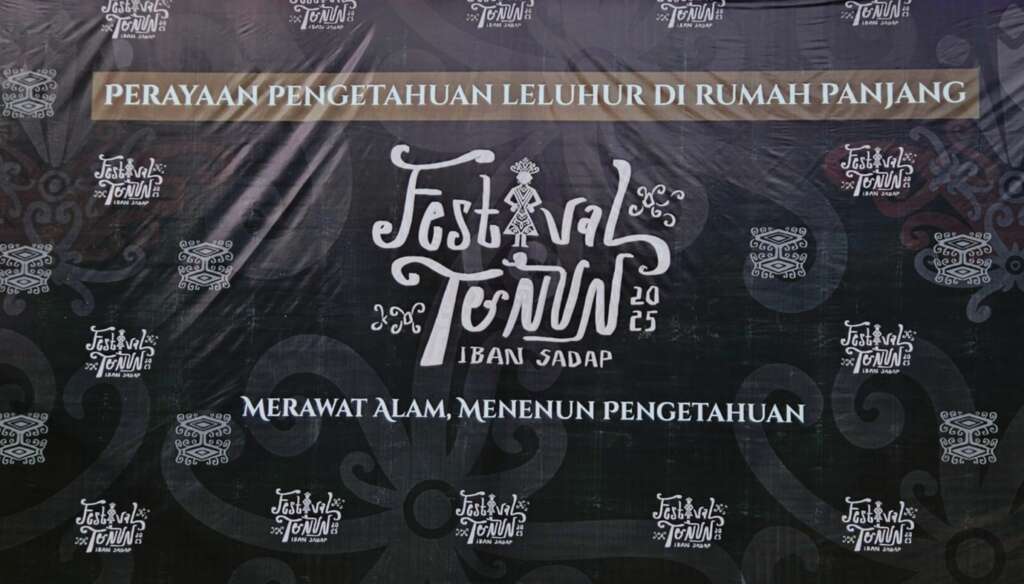
Global Relevance:
This study underscores that indigenous-led restorative economies are critical to achieving global climate and biodiversity targets. The Dayak Iban experience offers a replicable model for integrating cultural heritage, ecological stewardship, and sustainable livelihoods—directly contributing to the UN Sustainable Development Goals (SDGs), the Paris Agreement, and the Kunming-Montreal Global Biodiversity Framework.
Statement:
“Indigenous peoples are frontline guardians of forests and catalysts of just, sustainable economies. Their practices must be recognized and supported within national and international policy frameworks,” Mufti Barri, Executive Director of Forest Watch Indonesia emphasized.
Call to Action:
FWI urges international NGOs, donors, and policymakers to:
- Strengthen recognition of indigenous rights in forest governance.
- Support restorative economic initiatives that align with global climate and biodiversity commitments.
- Invest in community-led education and cultural preservation to ensure long-term sustainability.
About Forest Watch Indonesia (FWI):
FWI is an independent organization committed to transparency, policy advocacy, and community empowerment in forest governance across Indonesia.
Full Study available at : https://fwi.or.id/potret-ekonomi-restoratif-di-kapuas-hulu/